
Politics Desk
The Irony is So Thick You Could Spread It on Toast: Kemi Badenoch's Delightful General Election Hypocrisy
The Conservative leader has discovered the sanctity of electoral mandates approximately five prime ministers too late.
By The Editors · May 10, 2026 · 6 min
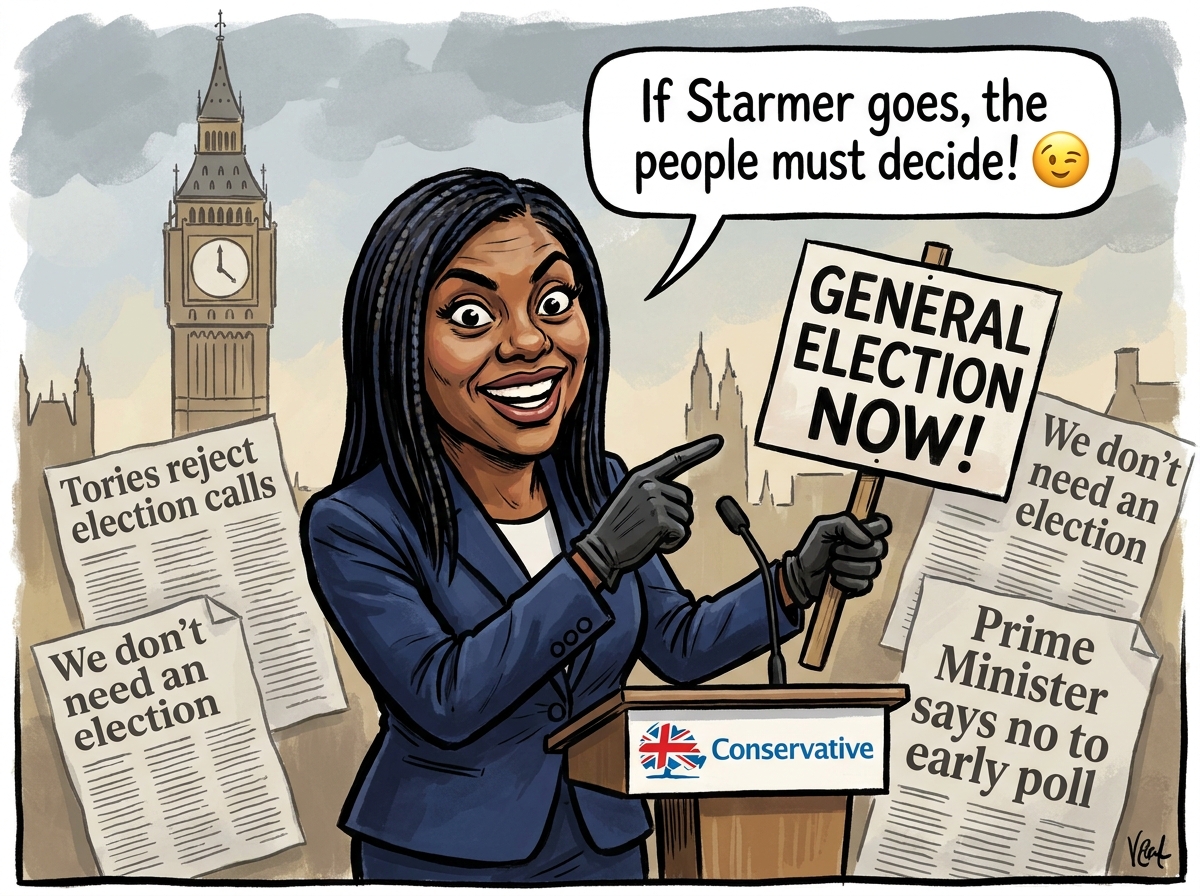
Kemi Badenoch, the Conservative Party leader who has apparently discovered principles approximately four months after inheriting the charred remains of a political party, has declared that if Keir Starmer faces a leadership challenge, Labour absolutely must call a general election. Because, and here's where it gets good, any replacement would have "no mandate to govern."
We'll pause here while everyone who has lived through the last fourteen years collects their jaw from the floor.
You see, there's something exquisitely comedic about this position when you consider that the Conservative Party has spent the past decade and a half playing leadership roulette with all the restraint of a toddler in a sweet shop—except instead of lollipops, they were swapping prime ministers like Pokemon cards. No general elections required.
The Conservative Party's Greatest Hits: A Leadership Reshuffle Tour
Let's take a brief tour through Conservative Party leadership changes—you know, the ones they managed without consulting the electorate:
David Cameron (2010-2016), shuffled off to make way for Theresa May (2016-2019), who was then replaced by Boris Johnson (2019-2022). Then came Liz Truss, who lasted approximately 49 days—a tenure so brief that some mayflies have had more productive runs. Then Rishi Sunak (2022-2024). That's five different prime ministers from one party, none of whom were chosen by the British public after the initial 2010 election.
“Five. Prime. Ministers. Zero general elections.”
But sure, Kemi, let's talk about mandates.
The thing is, Mrs. Badenoch isn't wrong in principle—the argument that a new leader replacing a departed PM should face the electorate is democratically sound, even noble. It's just the timing of this moral awakening that's hilarious. It's rather like a serial dinner guest suddenly declaring that hosts must invite everyone back after dessert, having spent years helping themselves to the leftovers without asking.
The Current Situation: Labour's Electoral Iceberg
To be fair to Badenoch, there is actual context here that makes her point worth examining. Labour suffered what can only be described as a spectacular pummeling in last week's local elections, losing council seats wholesale while a resurgent Reform Party carved through what used to be Conservative strongholds like a hot knife through butter. The polling suggests that if a leadership challenge materializes—and whispers of Angela Rayner, Wes Streeting, or Andy Burnham's potential return are certainly circulating—the party could face some genuine existential questions.
Badenoch's argument is technically sound: whoever replaces Starmer would arguably need some form of electoral legitimacy beyond the fact that they won an internal party vote. But the delicious irony is that this is precisely the argument that should have been made repeatedly during the Conservative government's last 14 years of musical chairs at Number 10.
The Real Story: Brass Neck and Political Survival
What Badenoch is actually doing is clever, if brazenly hypocritical. By calling for a general election now, she's betting that:
1) Labour would actually have to call one, which would likely destroy them further given the polling numbers
2) It makes her party look principled and democratic (convenient timing, that)
3) It puts enormous pressure on Starmer while her own party continues its gradual implosion in slow motion
The fact that the Conservative Party has absolutely no leg to stand on when it comes to the "mandate to govern" argument is exactly why she's making it so loudly. Political opponents of her party will be screaming about the 2016 May succession, the 2019 Johnson switch, or the catastrophic Truss-to-Sunak swap without a single public vote cast.
This isn't hypocrisy exactly—it's more like theatrical audacity. It's the political equivalent of a man who's wrecked three cars in a parking lot suddenly insisting that everyone else needs to take a driving test.
The Bigger Picture: When Democracy Gets Treated Like Musical Chairs
What this whole situation really highlights is that Britain's constitutional conventions around prime ministerial succession are more suggestion than rule. Unlike many other democracies, there's nothing legally binding that says a new PM appointed mid-term needs an election. It's custom, tradition, and democratic norms—all of which, as we've seen, are remarkably flexible when a government needs them to be.
Whether Labour actually does have to call an election if Starmer is replaced will ultimately be a political calculation, not a legal one. Badenoch's calling for it now because she thinks it benefits her party. If she were still in government? Well, we all know exactly what she'd be saying instead.
For now, though, we can sit back and enjoy the rather exquisite irony of a Conservative Party leader lecturing Labour about electoral mandates, having spent fourteen years demonstrating that such things are optional.
“The brass neck is so thick you could spread it on toast.”
— Fin —