Culture Desk
100% Tariffs on "Foreign" Films: A Blockbuster Idea That Falls Apart in the First Act
There are bold policy announcements, there are confusing ones, and then there are ideas so gloriously impractical they feel like they were workshopped in the writers' room of a political satire.
By The Editors · May 4, 2026 · 7 min
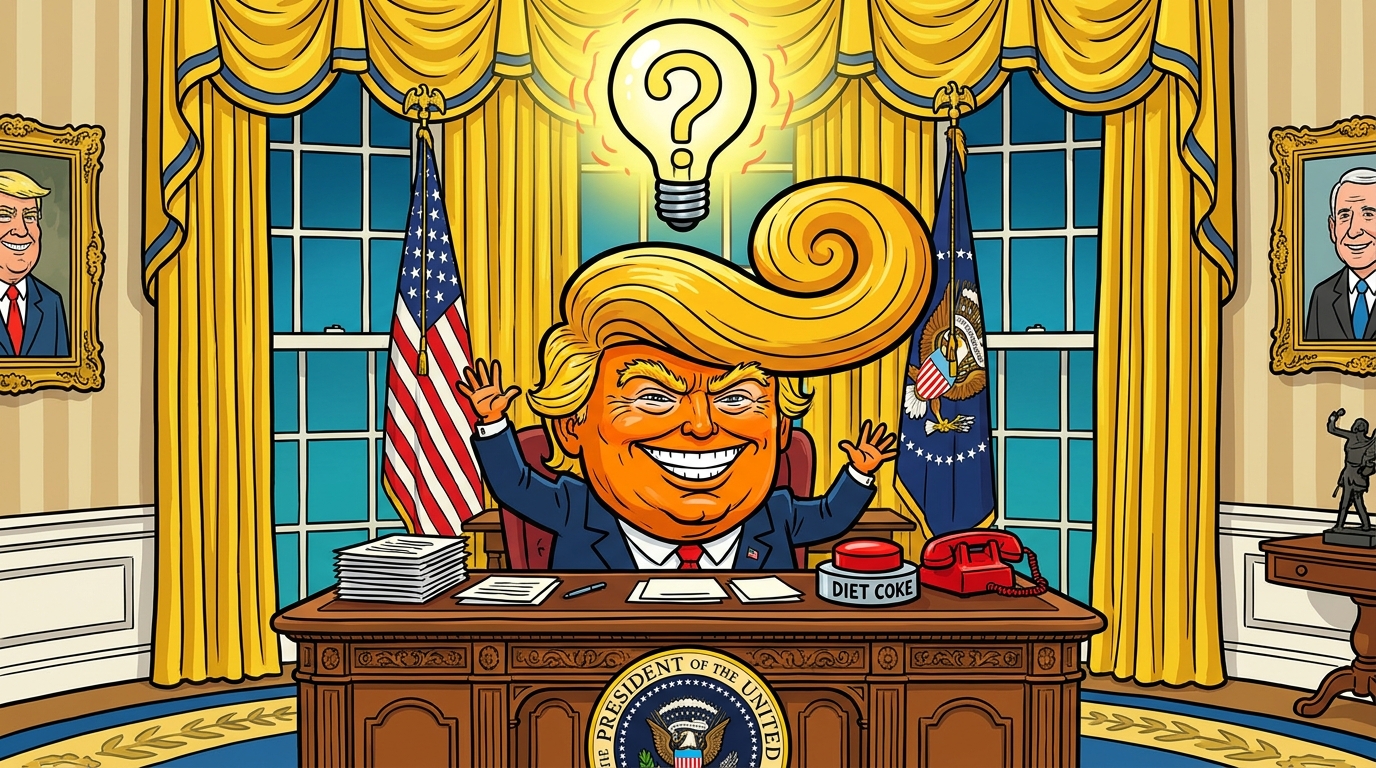
There are bold policy announcements, there are confusing ones, and then there are ideas so gloriously impractical they feel like they were workshopped in the writers' room of a political satire. Enter Donald Trump's latest headline-grabber: a proposed 100% tariff on any movie made outside the United States.
Yes, really. Not cars. Not steel. Films.
Because nothing says "economic strategy" quite like picking a fight with Paddington.
What Even Counts as a "Foreign Film"?
Before we get into the economic gymnastics, let's pause on a basic question: what is a foreign film anymore?
Is it a movie shot in London but financed by a Hollywood studio? A blockbuster filmed partly in Vancouver for tax reasons? A franchise entry from Marvel Studios that hops between six countries, three continents, and at least one green screen dimension?
Modern filmmaking is less "Made in America" and more "Assembled Globally Like Flat-Pack Furniture."
Take something like Mission: Impossible – Dead Reckoning Part One — shot across multiple countries, funded internationally, starring an American icon but stitched together from a global production web. Would it be taxed? Half taxed? Emotionally taxed?
Would customs officers be pausing mid-explosion to check passports?
The Economics: A Sequel Nobody Asked For
A 100% tariff means doubling the cost of importing foreign films. Which raises a small issue: who exactly is importing them?
American studios themselves frequently film abroad for tax incentives, use international crews, and partner with overseas production companies. So this tariff would essentially mean Hollywood… taxing Hollywood.
“It's the economic equivalent of punching yourself in the face and calling it border security.”
And let's not forget the cinemas. Chains already struggling to lure audiences away from streaming would now have to pay more for international releases, pass those costs onto viewers, and explain why your £12 ticket suddenly feels like a mortgage payment.
Global Retaliation: The Franchise Strikes Back
If there's one thing countries love more than cinema, it's retaliatory tariffs. Imagine the response: Europe taxes American blockbusters, Asia limits distribution, international co-productions dry up.
Suddenly, that next Avengers film is less "Endgame" and more "End Budget."
Hollywood doesn't dominate globally because it builds walls — it dominates because it collaborates. This proposal flips that model on its head and then sets it on fire for dramatic effect.
The Cultural Plot Hole
Beyond economics, there's a deeper irony here. American cinema has always thrived by absorbing global influences: British actors, Australian directors, New Zealand visual effects teams, Canadian filming locations.
Strip all that away, and what are you left with? A suspicious number of films set in Los Angeles where everyone inexplicably has perfect lighting and no passport.
Cinema isn't a national product anymore — it's a global conversation. Trying to tariff it is like trying to put customs checks on ideas.
Enforcement: The Real Comedy
Let's say, for a moment, this policy actually gets implemented. Who enforces it? Border agents watching entire films to determine their "national origin"? A "percentage of explosions filmed on U.S. soil" metric? A hotline for reporting suspiciously European cinematography?
Imagine the paperwork alone:
“Scene 47: Car chase. 63% filmed in Italy, 37% in a studio in Burbank. Please advise on tariff classification.”
By the time regulators finish deciding whether a film qualifies, the sequel will already be in development.
Final Verdict: Straight to Streaming
There's a certain theatrical flair to the idea — big, loud, and attention-grabbing. But like many overproduced blockbusters, it collapses under the weight of its own premise.
A 100% tariff on foreign-made films doesn't protect American cinema. It entangles it in bureaucracy, raises costs, invites retaliation, and fundamentally misunderstands how movies are made in 2026.
If implemented, the only guaranteed hit would be confusion. And possibly piracy.
In the end, it's less a serious policy proposal and more a reminder: when politics tries to rewrite the rules of a global industry, it sometimes forgets to read the script first.
— Fin —